
Author

Or, maybe my slightly less radical, but more sensible, title should be ‘Use words and icons’.
I’ve been blurting out the title of this post for years, quickly followed by a statement about how I should write about it. Well, here it finally is.
Provisos
A couple of important caveats to start.
I’m not criticising icon design or designers. It’s an important field. My beef is with interface designers choosing to use icons when there are better options.
I help to run a web design and development agency, so I guess most of what I’m talking about here is related to interface design. I suspect it might apply to other things like signage, but I also suspect there’s a lot I don’t know about such things and therefore may have that completely wrong!
Also, if your user interface delivers its content or functionality via multiple languages, and (important sub-caveat) you can’t translate all of the words that make up the interface, then in that case icons are probably your best bet (as long they’re designed so that your audience is more likely to understand the icon than a foreign (to them) word).
I wrote about listing things alphabetically a while back because it’s something the vast majority of us don’t even need to think about, and this is similar. For example, if you want (or have to) hide your navigation menu, then I recommend guiding your users to it via a link labelled navigation, menu, or navigation menu because they won’t be in any doubt as to what it is. This brings me nicely on to…
The hamburger icon… meh
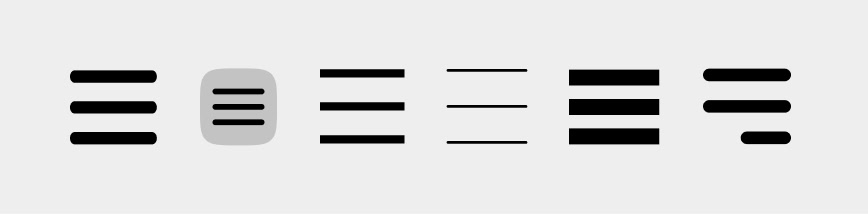
This little beauty has now become somewhat part of the furniture, but I think it’s still confusing for some.
Beware of thinking along the lines of “oh, this has been around for years so everyone gets it now”.
Everyone knows to click on the organisation’s logo to get back to the homepage, right? That’s what we thought when we carried out some usability testing of a prototype we’d put together a few years back.
The audience for this client was generally quite distracted which may have led to their confusion when asked to return to the homepage, but the testing showed they needed a clear home link as part of the main (not hidden) navigation.
Anyway, back to the hamburger icon, why not just use the word ‘Menu’ instead? It’s small enough to work on small screen devices. Why did we have to learn this new thing?
Software design
I think the answer, at least partially, lies with software design where lots of choices (tools, say) need to sit near each other and using words would simply clutter the interface.
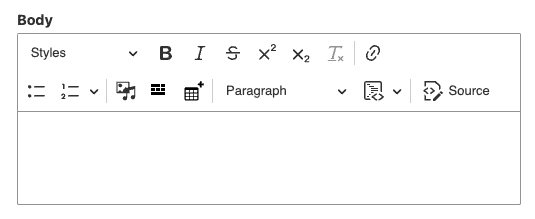
There has been a translation of ‘we use icons to simplify that layout, so we should do the same on this layout’ even though one is very different from the other.
There is also a temptation – that we at Headscape have fallen into more than once – to make one’s design more elegant, less cluttered, and certainly more minimalist through the use of icons.
But, those designs were definitely less intuitive for at least some users despite their loveliness.
Conclusion
There are many, many websites out there that only deliver content or functionality in a single language and the majority of the audience has that language as their first language, so in that scenario (of which there are millions), then just use a word or words instead of an icon because your users will likely comprehend their meaning a lot more quickly and clearly.
Or in other words, don’t make things harder for users in an attempt to make a minimalist design.